Omnichannel content that starts with one strong asset and is strategically adapted for every key channel can multiply reach, improve ROI and de-risk your marketing mix. For content directors and social media managers in New Zealand and the UK, “content once, distribute everywhere” means building an interconnected content network, not just copy-pasting posts, and aligning Content Marketing, Social Media and SEO so each piece is designed for the platforms and audiences that will actually see it.
The myth of simple “repurposing”
We’ve all seen the headlines. Repurposing is often sold as “take a blog and turn it into ten social posts”, but effective omnichannel content does more than slice text into smaller pieces. Digital Marketing Institute defines omnichannel marketing as delivering a consistent, integrated experience across channels that reflects how people move between them. In practice, this means adapting content to the behaviours, formats and expectations of each platform while maintaining a coherent message. In layman’s terms, that means understanding your audience on each of the platforms you are serving up content and ensuring your content meets their needs on that platform.

Recent content repurposing studies highlight that brands that systematically adapt content for multiple channels can see 2 to 3 times more reach and up to 300 per cent better ROI than those that rely on single-channel distribution. However, the same research warns that straight cross-posting can lead to audience fatigue, lower engagement and weaker brand perception, particularly when LinkedIn, X, YouTube and TikTok receive identical creative. The takeaway is simple: the myth is that repurposing saves time by doing less. The reality is that smart repurposing uses a powerful core asset to do more of the right things, in the right places.
This is where Digital Hothouse’s Content Marketing and Social Media services work alongside SEO. We start with a strategic content asset that can anchor search visibility, then design channel-specific adaptations that reinforce the same story across your entire ecosystem. Of course, this only works when you have the full buy-in from your management team, whether you work in-house or you’re an agency dealing with a client.
We’ve seen it so many times. A “quick win” is seen as scheduling the same post across a brand’s many social media channels, maybe at a different time of day or even on a different day altogether, but this is not going to cut the mustard. Whilst you will undoubtedly have some unique followers on each of those channels, you will also have a lot of brand loyal followers who track you across all your channels and for them, seeing the same piece of content across all of those channels can be a big turn off. Instead, by tailoring the content to suit the channel, you have a much higher chance of reaching someone with the same piece of content that has been adapted to suit the channel.
Platform-specific content adaptation
Multi-channel marketing only works when you respect the context of each platform. Sitecore’s guidance on omnichannel content strategy emphasises the need for adaptive content models, where structure and messaging are shared but presentation is tailored to channel and device. In other words, your core idea is channel agnostic, but your execution is channel native.
For example:
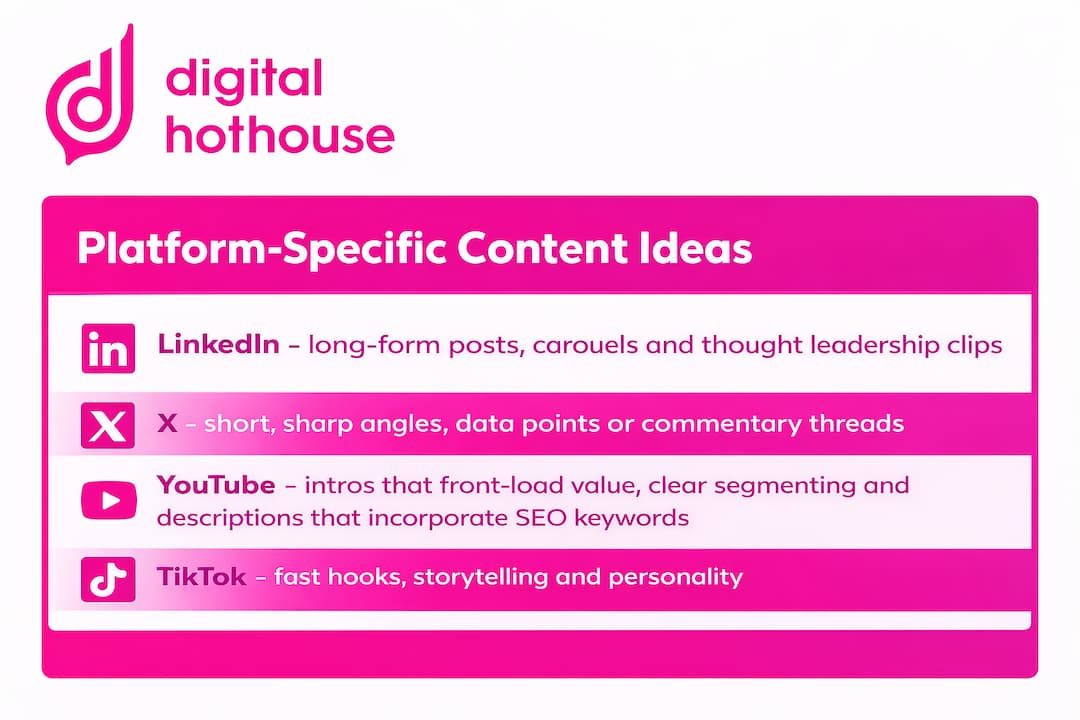
- On LinkedIn, long-form posts, carousels and thought leadership clips perform well for B2B and professional audiences. Tone can be more in-depth, with clear value and often a soft CTA.
- On X, short, sharp angles, data points or commentary threads work best. Posts must be scannable and hook-driven, with strong use of replies and quote posts to extend conversations.
- On YouTube, your content needs to stand alone as a video, with intros that front-load value, clear segmenting and descriptions that incorporate SEO keywords and links back to primary assets.
- On TikTok, the emphasis is on fast hooks, storytelling and personality, often with trend-aware audio or formats and captions that support skim viewing.
HubSpot and other distribution research shows that when brands adapt content format, length and tone to each platform while keeping the underlying message consistent, they achieve significantly higher engagement and recall than when they reuse identical posts everywhere. For NZ and UK brands, this means adjusting language nuances, time zones and cultural references as well, especially when posting around local campaigns or events.
Content calendars for multi-platform distribution
A content calendar is not simply a schedule of publish dates. In an omnichannel content network, it must show the relationships between core assets and their derivatives, planning when and where each piece will appear across channels. Sitecore recommends structuring content calendars around campaigns and themes, then mapping content objects to channels and journey stages rather than treating each platform as a silo.
A practical omnichannel calendar typically includes:
- A core asset row that lists high-value pieces such as whitepapers, major blog posts, webinars or pillar videos.
- Channel rows for website, email, LinkedIn, X, YouTube, TikTok and partner or syndication platforms, showing how each core asset will be adapted.
- Timing columns that stagger distribution so content can be reused and re-emphasised over weeks and months rather than being blown out in one week.
Multi-channel distribution research highlights that brands using integrated calendars and orchestration see stronger lead quality and conversion because audiences encounter consistent narratives across multiple touchpoints instead of disjointed messages. Digital Hothouse often pairs this calendar work with Content Marketing and SEO roadmaps, ensuring that search-optimised assets are given enough runway and support on social to achieve their full potential.
Tools for managing omnichannel workflows
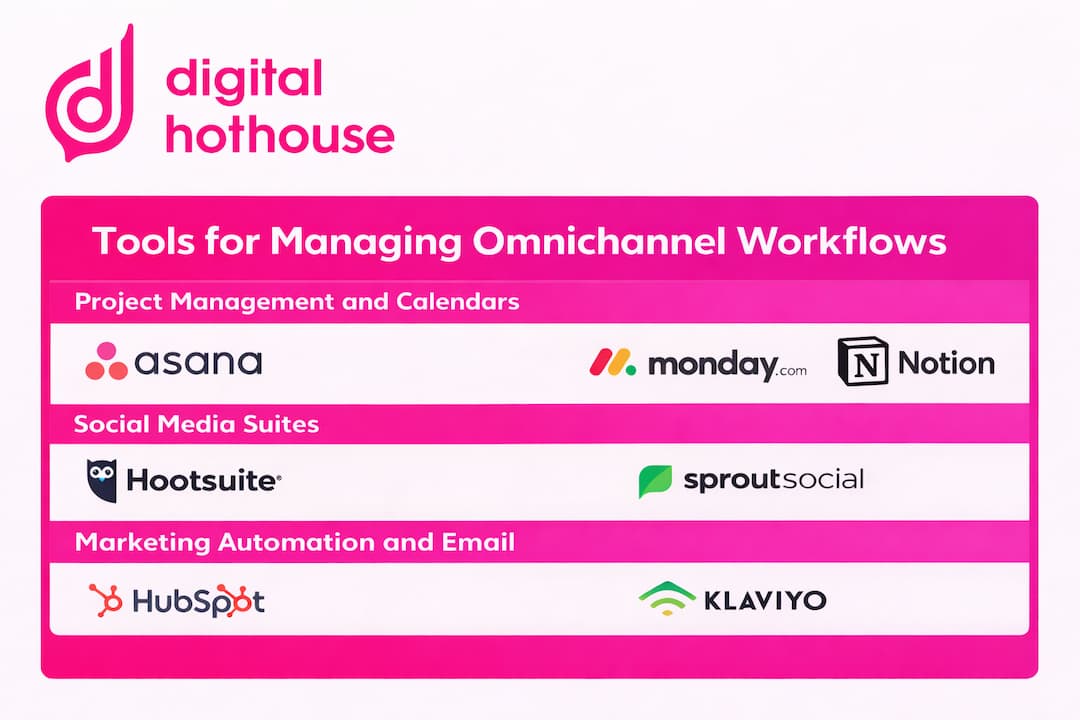
Managing an omnichannel content network manually quickly becomes unmanageable. Marketing operations teams increasingly rely on integrated tools that combine planning, creation, approval and publishing across channels. While specific platform choices vary by organisation, common categories include:
- Project management and calendars: tools like Asana, Monday or Notion for mapping campaigns, assigning tasks and tracking deadlines.
- Social media suites: products that support scheduling, channel-specific previews, social listening and reporting across LinkedIn, X, Facebook, Instagram and TikTok.
- Marketing automation and email: platforms like HubSpot or Klaviyo that integrate content with nurturing flows and lead scoring.
Omnichannel marketing tool reviews consistently point to integration as the key factor; systems that combine data and workflows reduce duplication and provide a clearer view of what is performing where. That in turn makes it easier to refine your content mix based on real results rather than assumptions. Digital Hothouse’s role is often to help clients choose and configure tools that support their Content Marketing, Social Media and SEO strategies rather than being a separate “stack” that fights with their objectives.
Optimisation nuances: LinkedIn vs X vs YouTube vs TikTok
It’s not enough to publish everywhere; you need to optimise for each environment. Digital Marketing Institute and multi-channel distribution studies emphasise that each platform has its own algorithms, engagement signals and content norms, which means your optimisation tactics must differ accordingly.
Some high-impact nuances include:
- LinkedIn: favour native content over external links, open with a strong first two lines to stop scroll, use 1 to 3 relevant hashtags and encourage comments to boost dwell time. Long-form articles and documents can also be used to extend thought leadership.
- X: use short hooks, threads for deeper dives and quote tweets to add context to trending topics. Timing and frequency matter more due to fast-moving feeds.
- YouTube: focus on strong titles, click-worthy thumbnails and clear video structure with chapters. Descriptions should be comprehensive, supporting SEO and cross-linking to main site content.
- TikTok: prioritise early hook, vertical framing, native editing features and trend-aware sounds. Consistent posting and community interaction drive algorithmic distribution.
Omnichannel studies show that when brands optimise content natively for at least three channels, they can achieve significantly higher compounded reach than if they simply optimise for one and cross post to others. Digital Hothouse helps clients codify these nuances into channel playbooks so content teams and social media managers can execute consistently across NZ and UK markets.
Case study: one whitepaper into 20 plus assets
To illustrate “content once, distribute everywhere”, consider a hypothetical NZ/UK B2B brand that publishes a 30-page whitepaper on future search trends.
From this single asset, an omnichannel content network might include:
- 4 long-form blog posts summarising key chapters with unique angles, each optimised for specific search intents.
- 6 to 8 LinkedIn posts featuring data points, quote cards and short insight summaries, plus at least one LinkedIn document carousel.
- 3 X threads breaking down stats, frameworks and implications, with visuals adapted from the whitepaper charts.
- 2 YouTube videos; one overview explainer and one panel-style discussion or client case study.
- 4 to 6 TikTok or Shorts clips featuring 30–60 second insights from the whitepaper’s findings.
- 2 email nurture sequences; one for prospects and one for existing customers, linking back to the download and related content.
Multi-channel distribution research indicates that this kind of structured reuse can generate 3 to 7 times the reach of the original asset and significantly more touchpoints with buyers across their decision journey. It is not about spamming every channel with the same message. It is about designing a cohesive content network where every piece plays a specific role in awareness, consideration or retention.
Digital Hothouse’s own Future of Search whitepaper and related blog series is built on this approach, supported by our Content Marketing, Social Media and SEO services to ensure we appear where and how decision makers are looking for guidance.
FAQ: omnichannel content networks and repurposing
Is content repurposing just copying posts across platforms?
No. Effective content repurposing means adapting a core asset into platform specific formats, lengths and angles while preserving the underlying message. Simple cross posting often underperforms because it ignores user expectations and algorithms on each channel.
What are the main benefits of omnichannel content distribution?
Studies show that multi channel content distribution increases reach, improves lead quality and drives higher revenue by placing your message in front of buyers at multiple trusted touchpoints. It also reduces risk by avoiding dependency on any single platform.
How do I choose which channels to include in my content network?
Start with where your audience already spends time and which channels support your objectives. Digital Marketing Institute recommends combining search, social, email and owned channels as a baseline, then expanding into communities or syndication as you grow.
Which tools help manage omnichannel workflows?
Integrated platforms that combine planning, publishing and analytics across channels are ideal. Reviews highlight marketing suites and social schedulers that support multi channel posting, audience segmentation and unified reporting as key to efficient execution.
How can Digital Hothouse support our omnichannel content strategy?
Digital Hothouse brings together Content Marketing, Social Media and SEO expertise to design and execute omnichannel content networks. We help you identify core assets, plan platform specific adaptations and build calendars and workflows that maximise reach and ROI across NZ and UK markets.
Conclusion
Omnichannel content networks transform one strong asset into a powerful ecosystem that works across search, social and email to drive awareness, engagement and conversions. For content directors and social media managers serving New Zealand and UK audiences, the real power lies in strategic planning, platform native adaptation and integrated execution that treats content as a connected system rather than isolated posts. When Content Marketing, Social Media and SEO work together, you create compounding effects that deliver measurable ROI far beyond what any single channel could achieve alone.
Ready to build your omnichannel content network and maximise content efficiency across every platform? Get in touch with Digital Hothouse today. Our Content Marketing, Social Media and SEO specialists will help you design core assets, create channel specific adaptations and implement workflows that multiply your reach and deliver consistent results for NZ and UK audiences.