AI-powered search engines are rapidly changing the way people discover brands. Traditional blue links are being replaced with AI-generated summaries, conversational answers, and context-rich snippets. For Brand Managers, SEOs, and Digital Analysts in New Zealand and the UK, this raises a critical question: how do you know if your brand is showing up in AI search results, and how do you track it over time?
In this post, we’ll explore practical ways to monitor your brand’s visibility in AI-driven search. We’ll cover the most effective tools, the right metrics to watch, and a step-by-step process for setting up your own AI brand tracking workflow.
Why Does AI Brand Tracking Matter?
AI search engines, whether Google’s AI Overview or AI Mode, Microsoft’s Copilot, or popular tools like ChatGPT and Perplexity AI, don’t just surface a list of links. Instead, they synthesise content from multiple sources, pulling brand mentions into conversational responses.
That means visibility isn’t just about “ranking #1” anymore. Instead, your brand could:
- Be cited in an AI-generated answer.
- Be recommended as a product, service, or example.
- Be referenced through third-party coverage (e.g. reviews, case studies, news articles).
Without monitoring this activity, you risk losing sight of how customers perceive your brand in these new search environments.
What Should You Be Monitoring in AI Search?
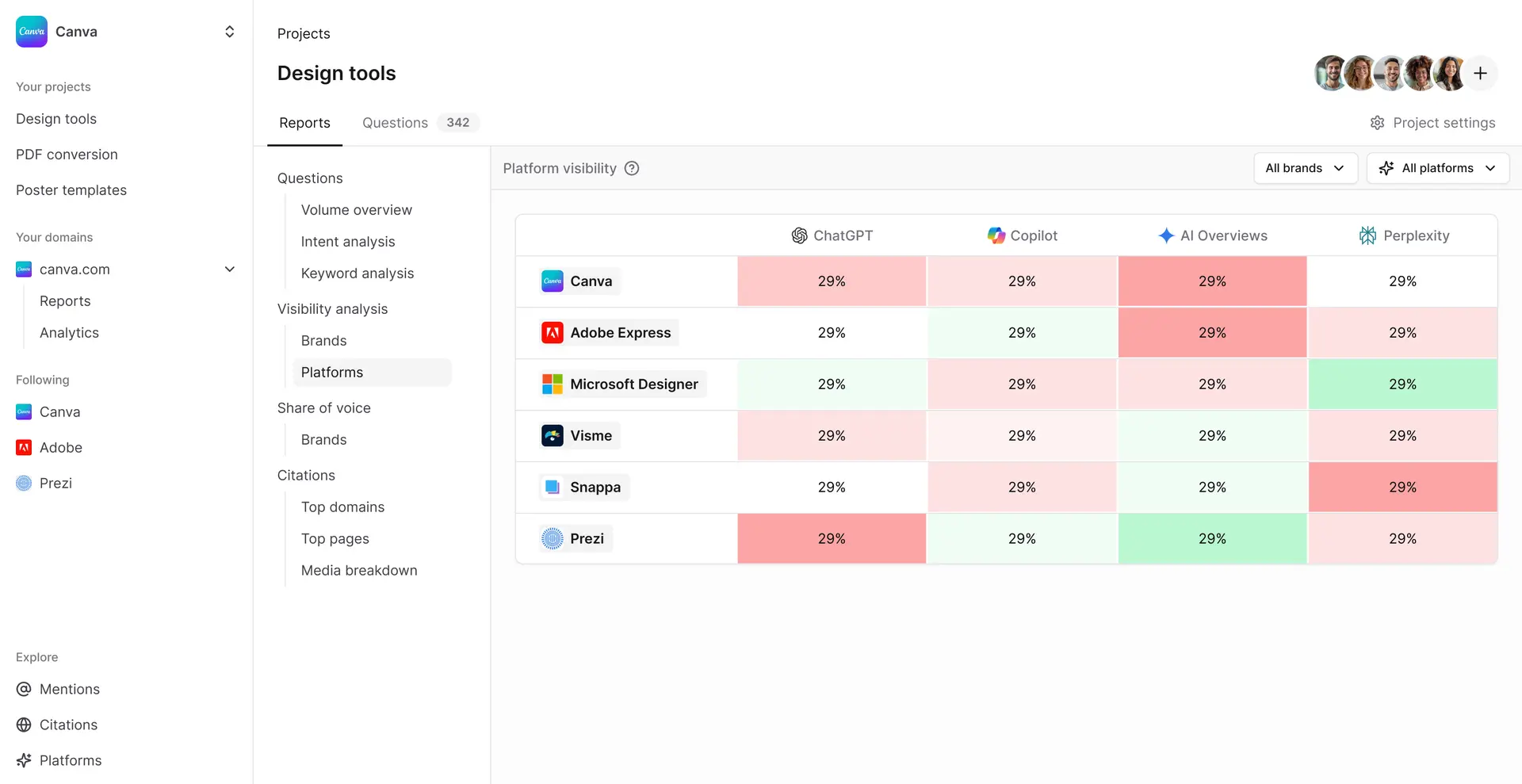
To effectively track AI brand visibility, focus on these key elements:
- Brand Mentions in AI Answers – Are AI tools explicitly referencing your brand when answering user questions?
- Citation Sources – Which articles, blog posts, or reviews are being used to represent your brand?
- Position vs. Competitors – Is your brand mentioned more (or less) often than competitors?
- Sentiment – Is your brand framed positively, neutrally, or negatively?
- Content Gaps – Where are competitors being cited but your brand is absent?
This shifts the emphasis from keyword rankings to brand coverage and authority signals.
Read more: Will SEO Still Matter in the Age of AI Search?
What Tools Can You Use for AI Brand Tracking?
Right now, AI brand tracking is still in its early stages, but several tools and platforms are evolving quickly:
1. Semrush
Semrush has introduced AI-powered analytics to track brand mentions across different platforms. You can monitor sentiment, share of voice, and visibility in both organic and AI-driven snippets.
We use Semrush here at Digital Hothouse and make use of their AI Visibility Toolkit’s core features including AI Visibility Score, Prompt Research, daily Prompt Tracking across ChatGPT, Google AI Mode/AI Overviews, Gemini, and Perplexity, Brand Performance (share of voice and sentiment), Narrative Drivers (cited-source breakdowns), and AI Search Health checks (incl. llms.txt). Semrush have an Enterprise package for those larger teams and agencies.
2. Ahrefs
While traditionally an SEO tool, Ahrefs now offers visibility reporting that can highlight which of your content pieces are gaining traction and being picked up in AI summaries. Look for backlinks and high-performing pages, as these often serve as inputs for AI-generated content.
3. Geoptie
A newcomer built specifically for AI search, Geoptie lets you run brand tracking queries directly within AI search interfaces (Google SGE, Bing Copilot, Perplexity). It logs when and how your brand is displayed.
4. Hall
Hall positions itself as an AI monitoring and measurement platform. It allows you to set up daily brand monitoring queries across multiple AI systems, giving you snapshots of where your brand shows up.
5. DIY Tracking with AI Platforms
If you don’t want to rely solely on tools, you can build your own monitoring system. We recently came across a great article with a step-by-step guide to DIY brand monitoring in AI platforms, focusing on tracking 15 key questions, establishing a baseline, and monitoring visibility over time. Read more: A Quick Guide to Checking If Your Brand Exists in AI Answers
How Do You Measure AI Search Visibility?
Tracking is one thing, but measurement is where real value comes in. Key metrics to consider include:
- Brand Share of Voice in AI Search – What percentage of AI responses in your category include your brand? What is the Semrush AI Visibility Score?
- Citation Frequency – How often does AI reference your site directly vs. third-party sources?
- Competitor Coverage – Who else is being mentioned, and what’s their relative visibility?
- Sentiment Analysis – Are mentions of your brand positive, or do they raise concerns?
- Traffic Impact – While harder to isolate, monitoring referral traffic from AI-linked citations can give useful directional data.
Step-by-Step Guide: Setting Up AI Brand Tracking
Here’s a simple workflow you can implement today:
- Define Your Queries
- Identify the top questions your customers ask.
- Run these queries across AI search engines (SGE, Copilot, ChatGPT, Perplexity, Claude).
- Record Mentions
- Track whether your brand is cited, how it’s positioned, and what sources are referenced.
- Use Semrush’s AI Visibility Score and cited-source metrics, and map your ‘Define Your Queries’ step to Prompt Research and Prompt Tracking
- Monitor Competitors
- Run the same set of queries for your competitors.
- Compare mention frequency and sentiment.
- Analyse Sentiment
- Note whether mentions are positive, neutral, or negative.
- Use tools like Semrush or Brandwatch for sentiment scoring.
- Report & Iterate
- Create monthly dashboards.
- Adjust your content strategy to target missing queries where competitors dominate.
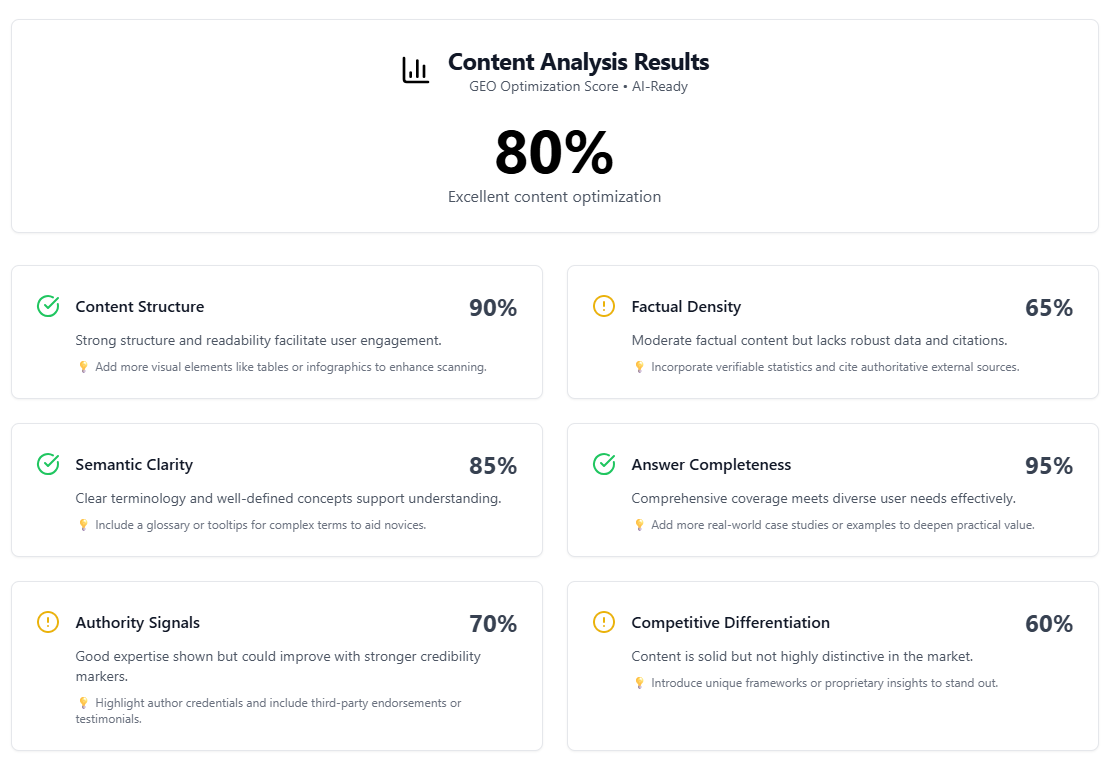
Pro tip: Ensure your content is structured with clear headings, bullet points, FAQs, and schema markup. AI search engines prefer this format when pulling citations.
How Does E-E-A-T Tie Into AI Brand Tracking?
Google’s E-E-A-T (Experience, Expertise, Authoritativeness, Trustworthiness) remains a major influence on whether your brand is surfaced in AI-generated results.
- Brands with strong authority signals (citations from Wikipedia, news outlets, case studies) are more likely to be referenced.
- Demonstrating expertise through in-depth blog posts, white papers, and original research gives AI engines high-quality content to draw from.
- Trust signals, such as case studies and transparent sourcing, further improve the likelihood of inclusion.
See how we’ve helped brands like Postie and Smart Water build strong authority signals through technical SEO and content optimisation.
Read more: How Do You Build Trust and Credibility for AI-Powered Search?
What’s Next for AI Brand Monitoring?
We’re only at the beginning. Over the next 12–24 months, expect to see:
- More advanced tracking tools purpose-built for AI search.
- Benchmarking frameworks for comparing AI visibility across industries.
- Integration into SEO platforms so AI tracking becomes part of the standard reporting suite.
Brands that start tracking now will have a competitive edge, understanding where they stand, identifying content gaps, and adapting faster than those who wait.
Conclusion
AI search is here, and it’s reshaping how brands show up in front of customers. Traditional ranking reports aren’t enough anymore. By monitoring brand mentions, citation frequency, competitor visibility, and sentiment across AI-powered platforms, you’ll gain a clear picture of your presence in this new search landscape.
And just as importantly, you’ll be able to adapt your content and SEO strategies to ensure your brand remains visible, trusted, and competitive.
FAQs: Monitoring and Tracking Your Brand in AI Search
What’s the difference between SEO tracking and AI brand tracking?
SEO tracking focuses on keyword rankings and traffic, while AI brand tracking focuses on mentions, citations, and visibility in AI-generated answers.
Do AI search engines show different results than traditional Google search?
Yes. AI engines synthesise answers, pulling from multiple sources instead of showing a ranked list of links.
Can I measure traffic directly from AI search engines?
There are filters you can put in place within Google Analytics which can help you to monitor referral traffic from AI platforms which can give you a good indication; however, we expect some of the new AI monitoring tools will start to integrate click data over the next 12 months.
How often should I monitor my brand in AI search?
At least monthly, though competitive industries may benefit from weekly tracking.
What’s the best way to improve my brand’s AI search visibility?
Focus on structured, authoritative, user-focused content that aligns with E-E-A-T principles. Case studies, FAQs, and expert-led articles perform especially well.
Want help tracking your brand in AI search? Talk to the team at Digital Hothouse – we’ve already built AI monitoring frameworks for some of New Zealand’s and the UK’s fastest-growing brands.
Glossary of Key Terms
AI Brand Tracking
The process of monitoring how your brand is mentioned, summarised, and represented in AI-driven search results and generative platforms.
AI Search Visibility
A measure of how prominently your brand or content appears in AI-powered search results such as Google’s AI Overviews, Perplexity, or ChatGPT responses.
Monitoring Tools
Software platforms such as Ahrefs, Semrush, Geoptie, or Hall are designed to track rankings, mentions, sentiment, and visibility across traditional and AI search engines.
Brand
As defined by Wikipedia, a brand is a name, term, design, symbol, or any other feature that identifies one seller’s product or service as distinct from others.
Web Analytics
The measurement, collection, analysis, and reporting of web data for understanding and optimising web usage. See Wikipedia.
SEO Software
Digital platforms that help monitor, analyse, and improve search engine performance. More details available on Wikipedia.
About This Series
This article is part of our ongoing series on AI Optimisation – helping business leaders, marketers, and SEO professionals in New Zealand and the UK understand how AI is reshaping search. If you want to dive deeper, check out our whitepaper The Future of Search: Beyond Rankings and Traffic and explore our dedicated AI Optimisation services page. Together, these resources will help you future-proof your visibility in a world where AI search engines deliver answers, not just links.
Download Our Whitepaper
Want a deeper dive into how AI is reshaping search?
Download our whitepaper: The Future of Search: Beyond Rankings and Traffic for practical insights, case studies, and actionable steps your business can take today.
Closing Thoughts
Monitoring and tracking your brand in AI search isn’t just about checking visibility – it’s about understanding context, trust, and authority. AI platforms don’t simply list links; they summarise your brand story. That means accuracy, sentiment, and authority signals are more critical than ever.
At Digital Hothouse, we’ve helped brands in New Zealand and the UK adapt to these shifts, blending classic SEO fundamentals with cutting-edge AI brand tracking strategies. Whether you’re just starting to explore AI visibility or you’re ready to integrate advanced monitoring tools, now is the time to futureproof your brand presence.